Home/Product ranges/Forklift kits
DEMAC rangeForklift kits
Go to the forklift kit for two lines, four lines, hoses and cable, or cable/camera. For a replacement, the reel’s serial number is required. Also record the full code, right- or left-hand execution and the existing fittings.
For information about the manufacturer, see the DEMAC brand (FR).
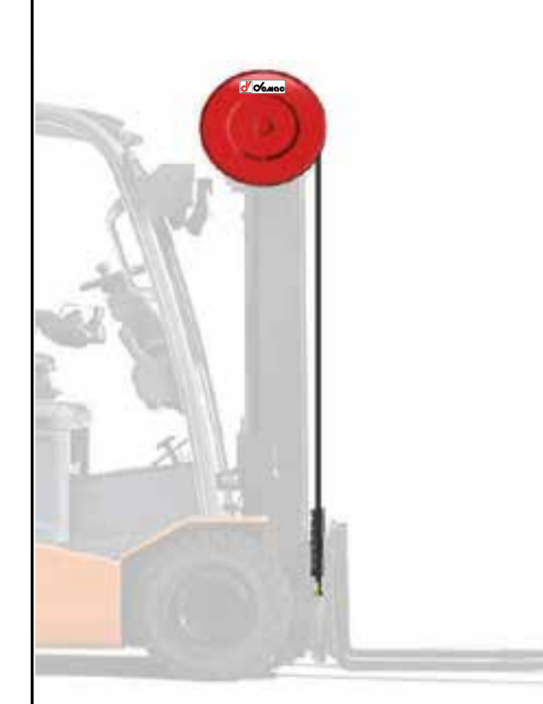
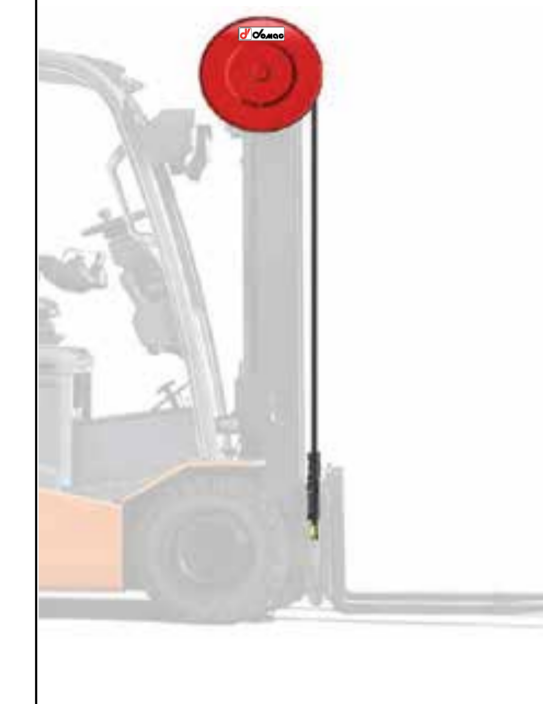
Choose from four kit families
Forklift kits
Two-line kit
Reel, hose and fittings. Compare the right- and left-hand part numbers.
View part numbers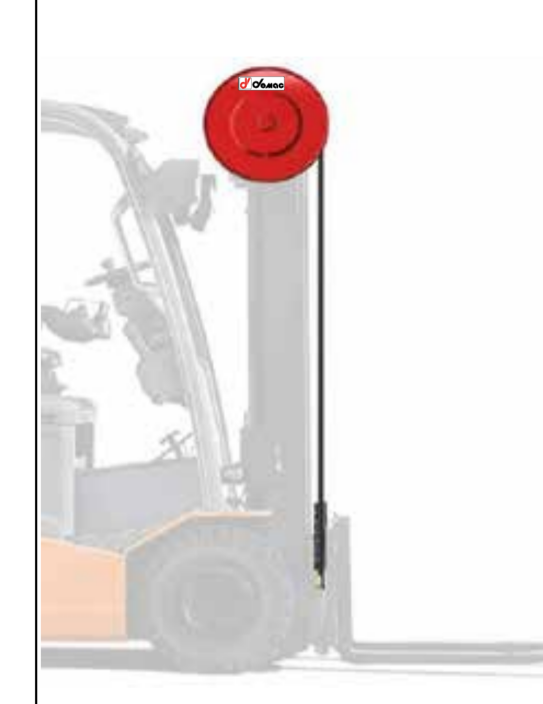
Four-line kit
Four hydraulic lines; compare the hose configuration and fittings.
View part numbersCombined hose and cable kit
Two hydraulic lines with a cable; number of conductors depends on the part number.
View part numbers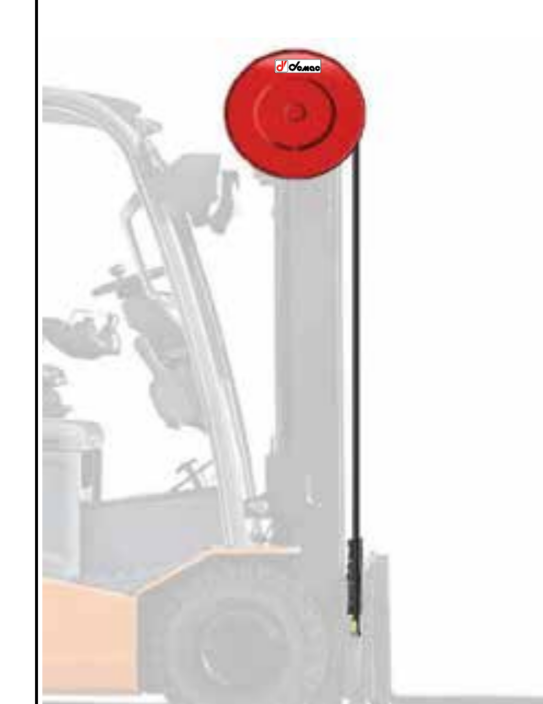
CR/S cable / camera kit
Cable and camera versions; the photo shows the CR-04 camera version.
View part numbersAvailable kits
| Family | Contents | Versions |
|---|---|---|
 Two-line kits Two-line kits | Twin hose reel, hose, Crocodile guide and fittings | R7 and R8 × 4 standards |
 Four-line kits Four-line kits | Four-line reel, hose, Crocodile guide and fittings | R7 and R8 × 4 standards |
 Combined hose and cable kits Combined hose and cable kits | 2 hydraulic lines + cable with 2 to 6 conductors | R7/E2, /E3, /E4, /E6 × 4 standards |
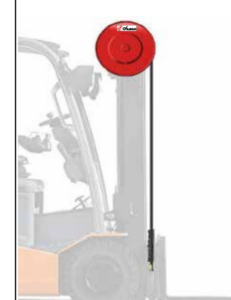 CR/S series cable kits CR/S series cable kits | Cable reel only | CR-02/S to CR-06/S, including a camera version |
Each kit is available as a right-hand and left-hand model, each with a separate part number. Record the existing handedness and check the routing before ordering. To change the handedness, see installation and servicing conditions (FR).
What a kit contains
The reel, with twin hose for 2 lines or a 4-line configuration, right- or left-hand.
The hose, cut to the kit length — SAE 100 R7, R8 or B1 depending on diameter.
The Crocodile CDL articulated guide, which controls the bend radius at the outlet.
The fittings, to the selected standard.
Check the kit as a whole: hose length, compatibility with the drum and guide, fittings and mounting orientation. A similar part number does not guarantee a replacement will fit the existing support.
Fitting standard: four versions of the same kit
Record the standard and size of the existing connections before comparing kit variants.
| Standard | Typical use |
|---|---|
| Metric | Continental European manufacturers |
| BSP | British standard, widely used in Europe |
| JIC | American SAE J514 standard, machinery of North American origin |
| DIN | German standard, 24-degree cone |
The four standards are not interchangeable. Compare the connections on both sides and the available space before considering an adaptor.
Check the forklift’s auxiliary circuit, not the attachment manufacturer’s documentation: the fitting must match the forklift side.
Calculate the required hose length
When sizing an installation, use the manufacturer’s diagram and measurement definitions. For a replacement, also record the reel’s serial number, the part number and the length of the existing kit.
View the complete diagram in the DEMAC catalogue (PDF, page 5)
The drawing and dimensions H, A and L are shown together in the manufacturer’s document.
Two measurements are required:
- H — the mast’s total lifting height.
- A — the distance between the reel axis and the hose end, with the mast lowered.
The required usable length L is calculated as follows:
| Condition | Usable length |
|---|---|
| If H ≥ 2 × A | L = H − A |
| If H < 2 × A | L = A |
In the second case, the distance between the reel and the connection point determines the required length. Take the measurements on the planned layout; any change to the installation requires a fresh check.
Duplex or triplex: the catalogue provides the calculation
The catalogue specifies the maximum lifting height for a duplex mast and for a triplex mast. Use the column for the relevant mast and check the installation conditions shown in the manufacturer’s diagram.
The same kit covers a greater lifting height with a duplex mast than with a triplex mast. For the metric R7 kit with a 230 flange and 1/4″ hose, the catalogue specifies 4 000 mm with a duplex mast compared with 3 000 mm with a triplex mast, for the same usable length of 1 900 mm.
Do not transfer a kit from a duplex mast to a triplex mast of the same height without checking the routing, dimensions and usable length.
Hoses in the forklift catalogue
Compare the hose construction and diameter: read the permissible pressure on the corresponding row of the table.
| No. | Diameter | SAE 100 R7 | SAE 100 R8 | B1 | Max. flow rate |
|---|---|---|---|---|---|
| 3 | 3/16″ — 5 mm | — | — | 360 bar | 10 l/min |
| 4 | 1/4″ — 6.3 mm | 210 bar | 350 bar | — | 15 l/min |
| 5 | 5/16″ — 8.1 mm | 190 bar | 300 bar | — | 22 l/min |
| 6 | 3/8″ — 10 mm | 160 bar | 280 bar | — | 30 l/min |
| 8 | 1/2″ — 12.5 mm | — | 245 bar | 190 bar | 30 l/min |
The table specifies 350 bar for R8 compared with 210 bar for R7 in 1/4″. Pressure is not the only compatibility criterion: also check construction, bend radius and connections.
The 3/16″ size is listed at 360 bar in this table. Selection also depends on the required flow rate and circuit compatibility.
The kit’s permissible pressure must respect the limits of all its components. A reel rated at 300 bar does not increase the 160 bar limit of a 3/8″ R7 hose.
What to send for a quotation
- For a replacement: reel serial number, full part number, photo of the nameplate and views of the existing installation.
- Mast lifting height and type — duplex or triplex.
- Attachment to be supplied and number of circuits.
- Pressure and flow rate of the forklift’s auxiliary circuit.
- Fitting standard on the forklift side : metric, BSP, JIC or DIN.
- Proposed reel location and outlet direction.
- Sensors or controls on the attachment that require a combined hose and cable kit.
For mounting constraints on this machine, see the application page forklifts (FR).
Quotations and technical advice on request.